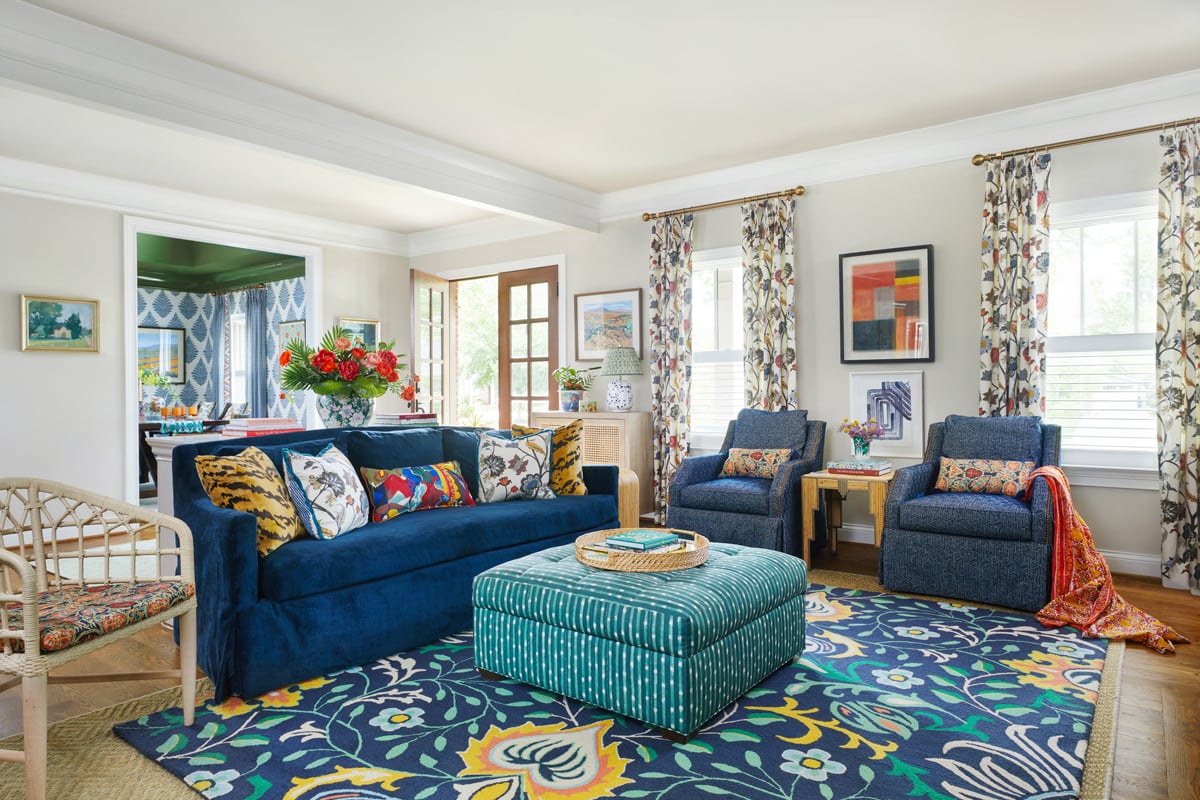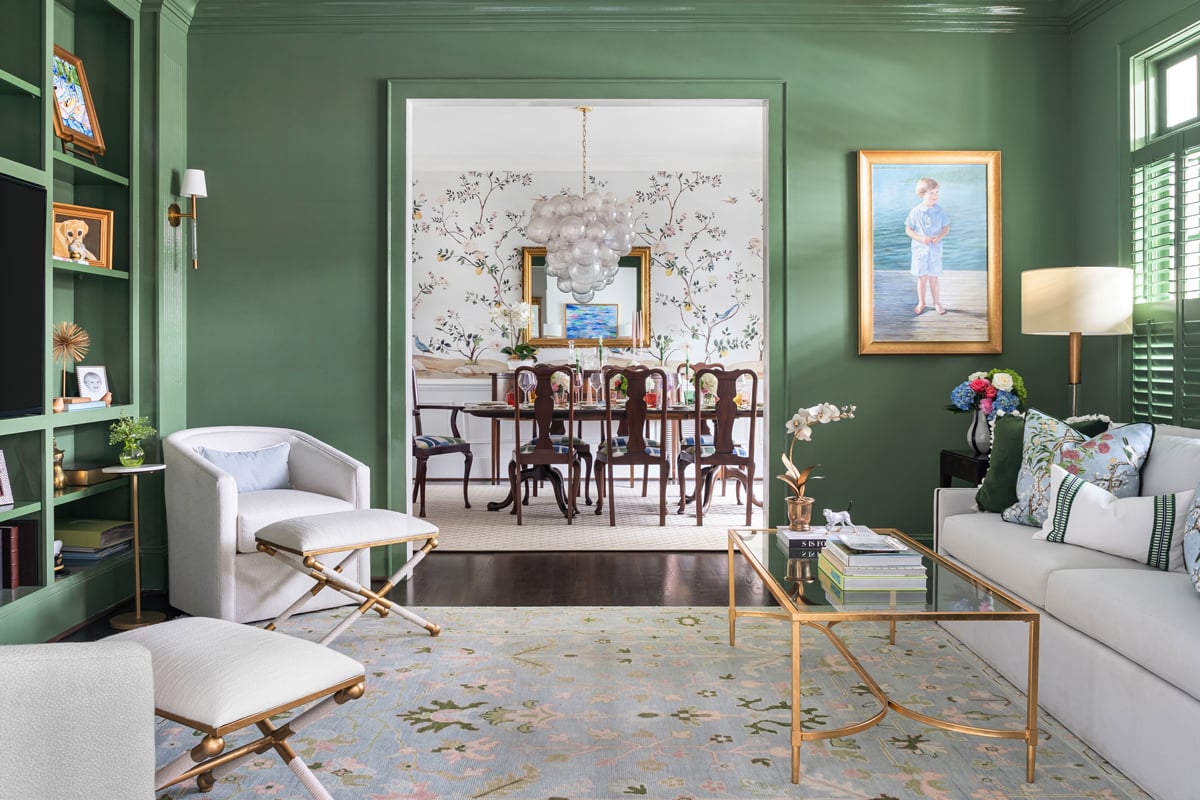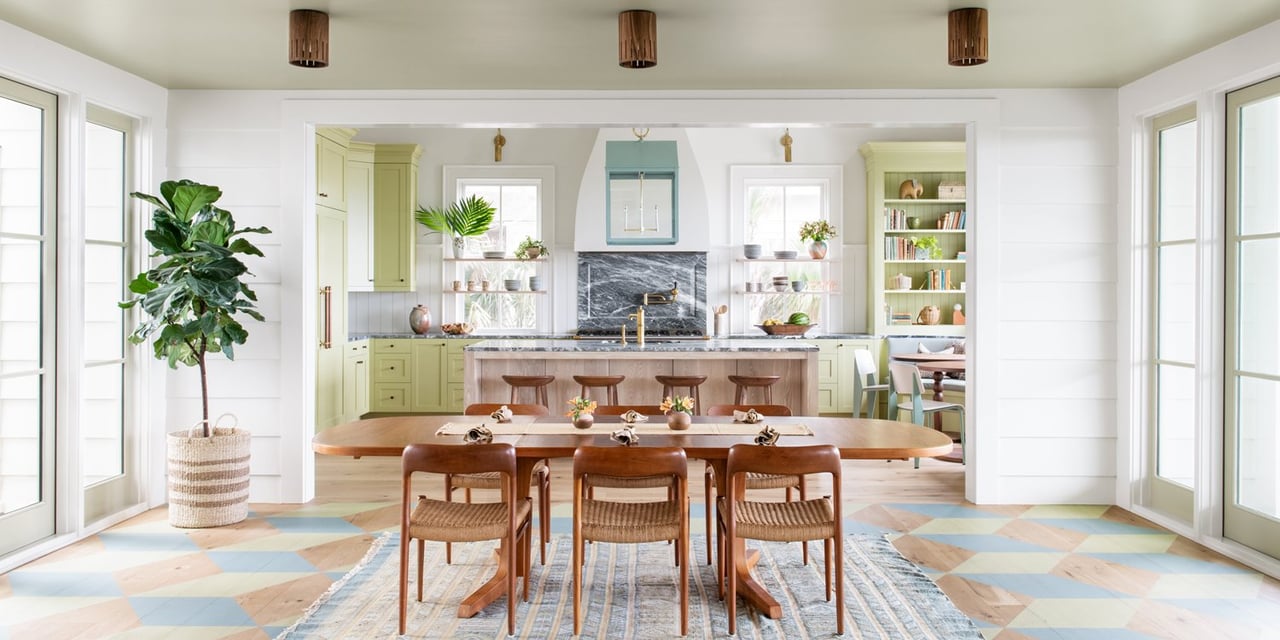
Scale is the quiet force behind every well-designed room. Join us as we break down the essential proportions for artwork, rugs, and furniture.
Why getting the proportions right makes all the difference in how a home feels.
Good design isn’t just about what you choose, it’s about how those choices relate to one another. To that end, scale is the quiet force that determines whether a room feels intentional or unsettled, expansive or cramped. When proportions are right, spaces feel effortless and balanced. When they’re off, even beautiful pieces can feel uncomfortable or misplaced. Understanding scale allows every element in a room to work together, creating harmony rather than competition.
Artwork
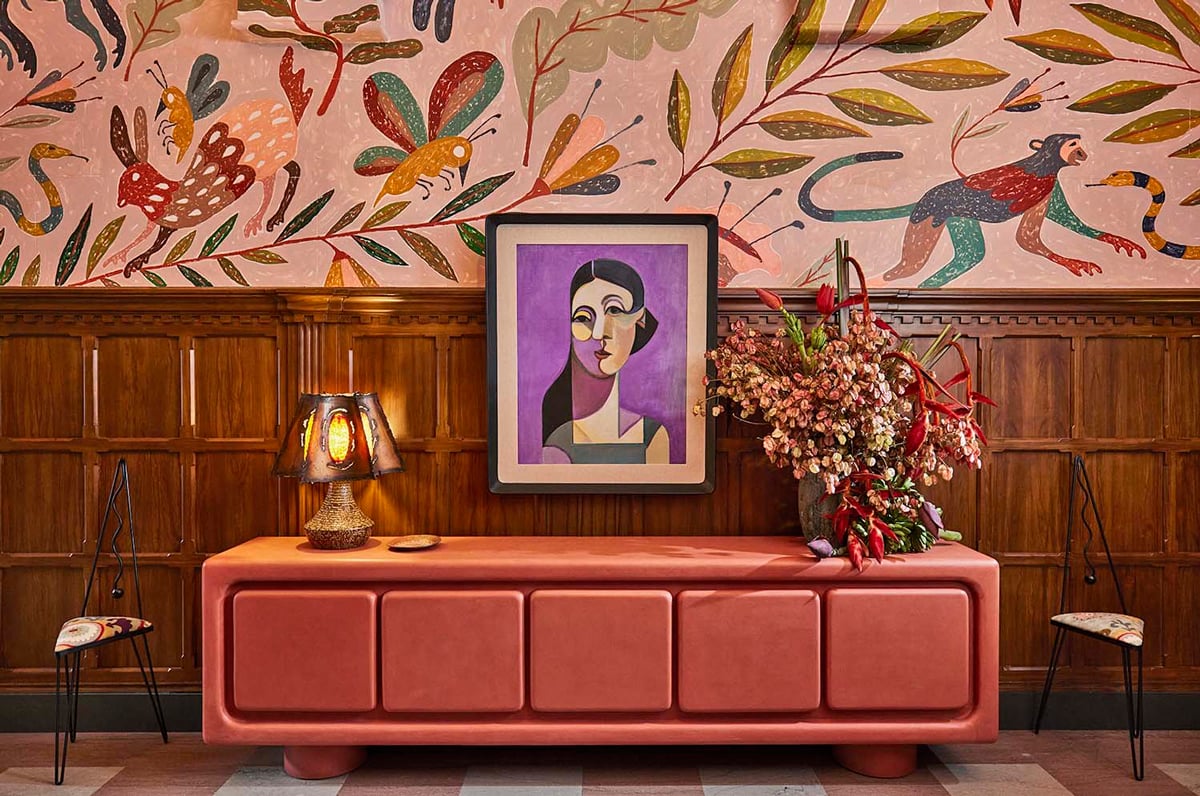
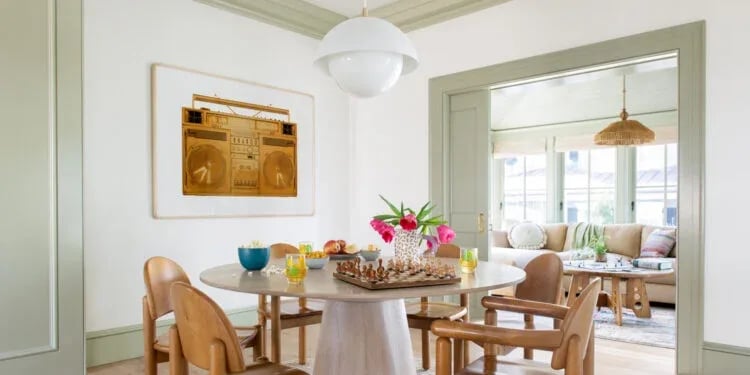
Artwork is often the first place scale reveals itself in a room, and it’s also one of the easiest places to misjudge proportion. It’s common to default to a standard 24-by-30-inch piece, only to hang it and realize it feels undersized—especially on larger walls. Unless artwork is headed for a powder room or narrow hallway, sizing up almost always creates a better result.
Large-scale art brings clarity and confidence to a space, anchoring the room in a way smaller pieces rarely do. As a general rule, artwork should be about 60-75 percent the width of the furniture it hangs above. When it’s floating on a wall by itself, aim for artwork to fill at least 50-60 percent of the wall width. Vertical scale matters too: don’t be afraid of height, especially with ceilings 9 feet or taller.
Gallery walls can also be a smart alternative to a single oversized piece, offering flexibility in cost, coverage, and sourcing. When treated as a single, large composition, smaller pieces (ones you may already have on hand) create the same sense of presence and scale. While each individual piece may be smaller in size, the overall arrangement can span six to seven feet, delivering impact without relying on a single statement work.
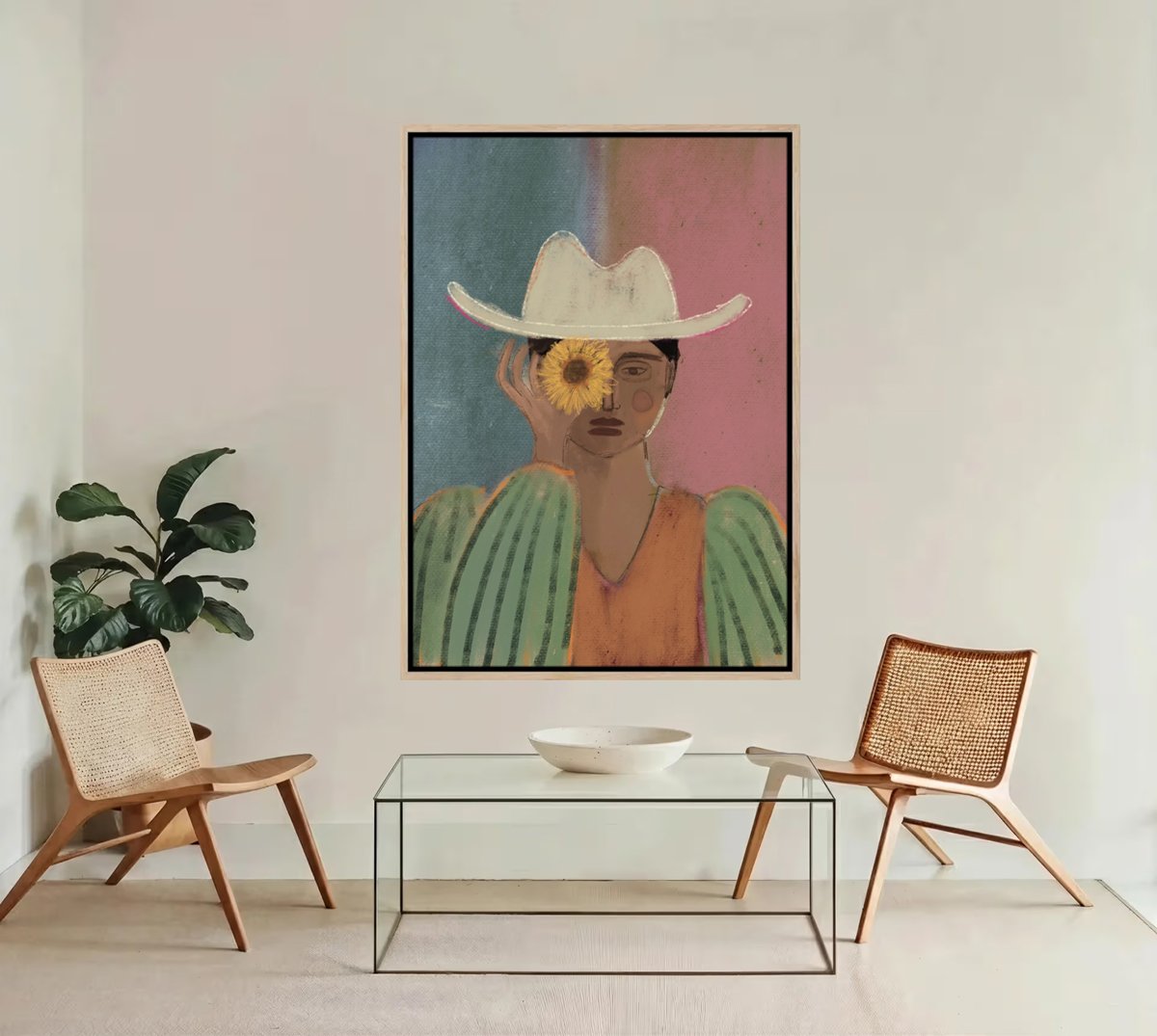
We love this piece by artist Shanon Vreeken, whose portraits are known for their use of color, emotion, and feminine energy. Available at goodmoodprints.com.
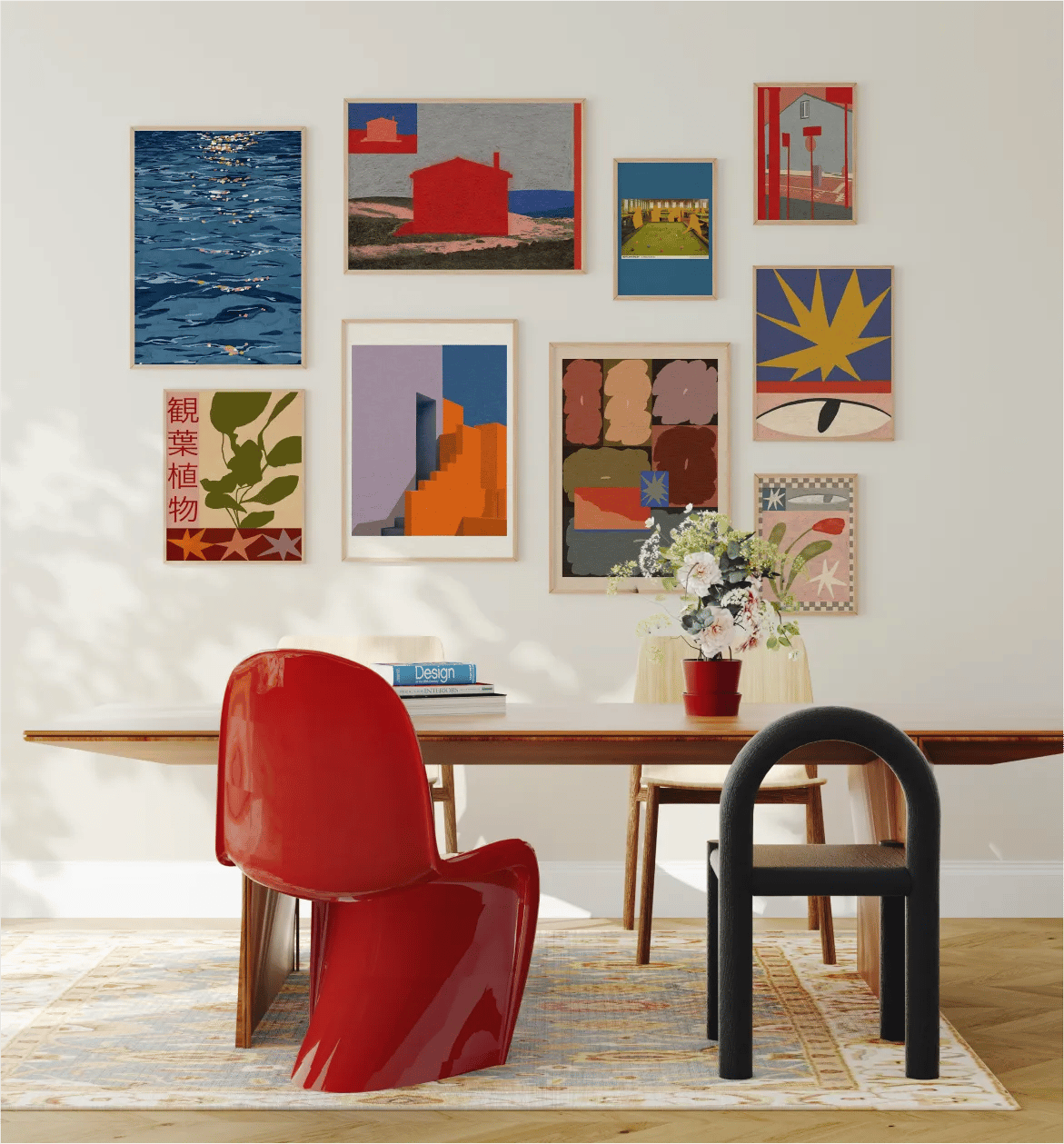
This gallery collection by artist Sophie Deller works thanks to its cohesive palette of reds, blues, pinks, and purples. Natural wood frames add warmth and balance. Available at goodmoodprints.com.
Patterns
Pattern sets the rhythm of a room. It has the power to energize a space or overwhelm it, and scale is what determines the difference. In the room above, the striped wallpaper works because of its proportion. The stripes are wide enough to register across the soaring sloped ceiling and walls, yet refined enough to feel delicate rather than heavy. Instead of breaking up the architecture, the pattern unifies it, drawing the eye upward and emphasizing the room’s volume.
This room follows a reliable rule for mixing patterns: choose one large scale, one mid scale, and one small scale. Here, the wallpaper carries the largest scale, the striped bench anchors the middle, and the checkered rug provides the smaller counterpoint. The draperies and bedding, both rendered in solid colors, create a moment of visual rest. These quieter elements provide a necessary counterbalance, preventing the layered patterns from feeling chaotic. Together, the composition creates a visual cadence that keeps the eye moving comfortably through the space.
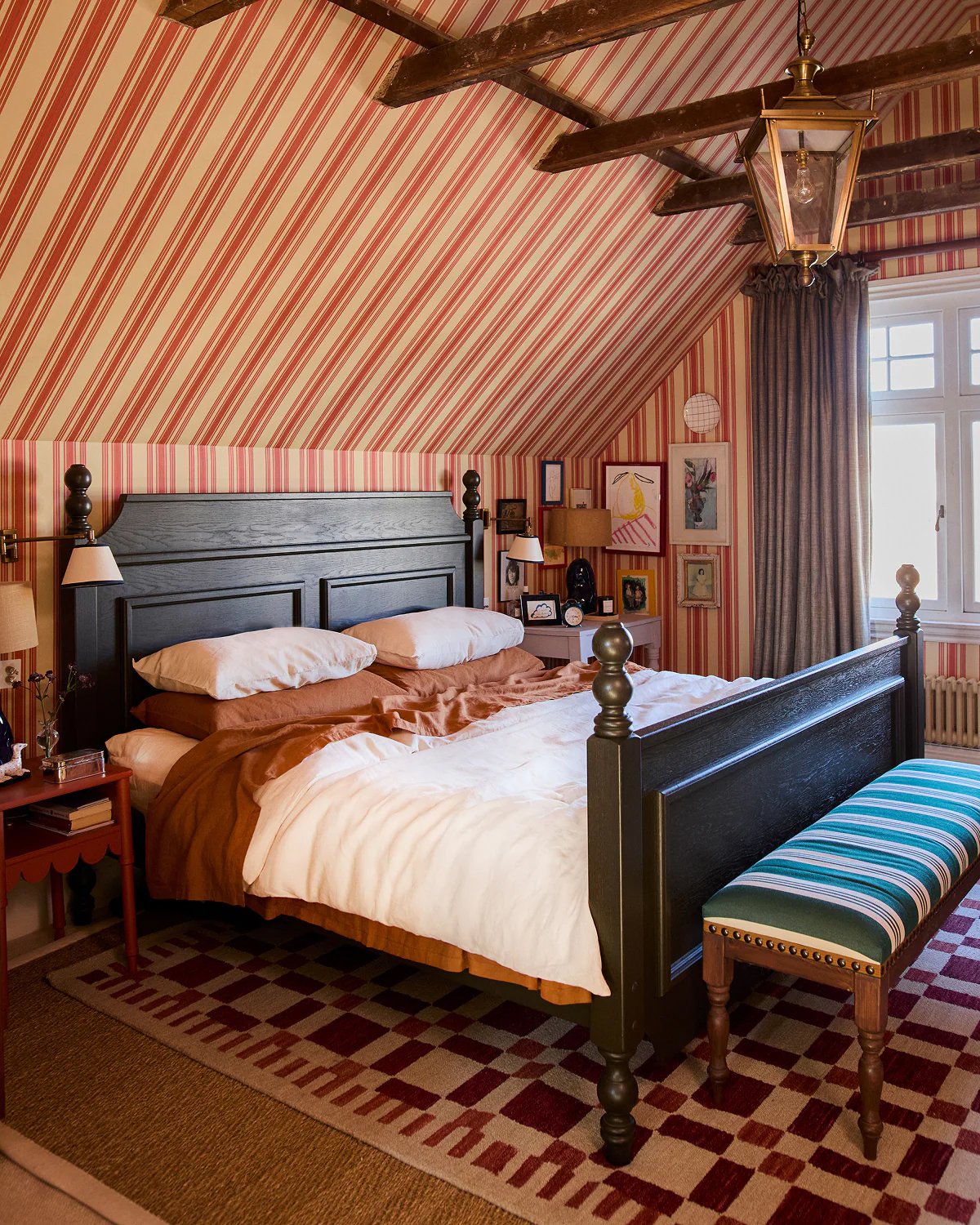
The flax linen sheets in a terracotta color pull together the warm hughes in the wood beams above and the checkers in the rug below. Sheets, pillowcases, and duvet cover available at bedthreads.com.
Rugs
Few elements define a blank room as quickly as a rug. When scaled correctly, it grounds the space; when it’s too small, everything around it begins to feel disconnected. A properly scaled rug should anchor the furniture it serves, creating a visual foundation rather than floating beneath it. When rugs are too small, the room itself can appear smaller and less grounded, and the negative space around the perimeter starts to dominate.
As a general rule, rugs should be large enough for at least the front legs of major furniture pieces to rest on them. When in doubt, choosing the larger size almost always results in a more cohesive and elevated space. In this space the rug works because of its generous proportions and restrained pattern. The subtle border provides definition without overpowering the room, allowing the furniture to sit comfortably within its frame. By extending beyond the sofa and chair, the rug unifies the seating area and gives the room a sense of calm and permanence.
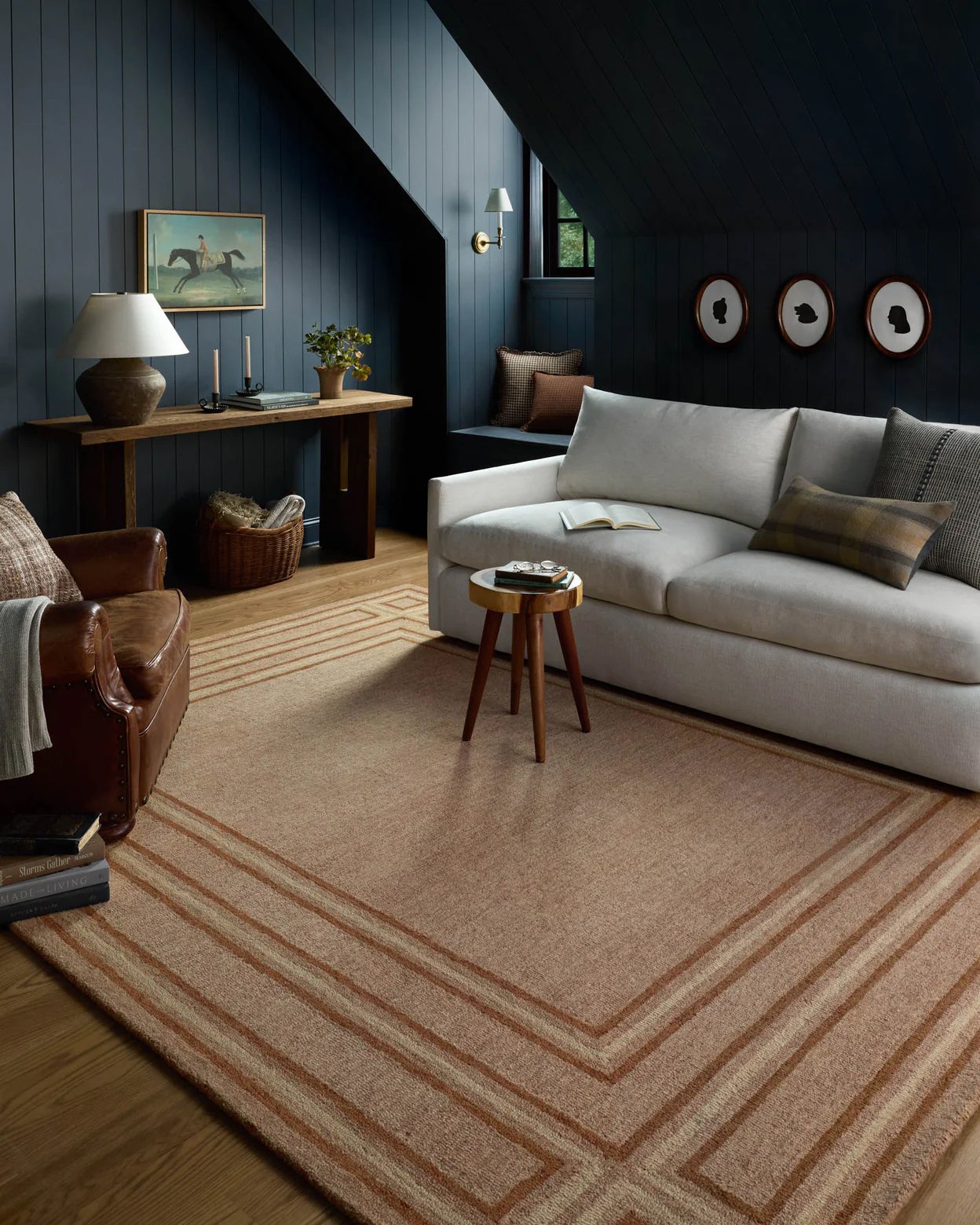
The Alfie rug in blush and rose by Chris Loves Julia x Loloi is hand-tufted from 100% wool. We suggest a plush rug pad underneath for added comfort and longevity. Available at rugsdirect.com.
Lighting
Lighting has an outsized influence on how any room feels, especially when it comes to scale. Fixtures that are too small can feel timid or disappear entirely, especially in spaces with taller ceilings. Well-scaled lighting, on the other hand, provides structure and visual presence, helping define a room rather than simply illuminating it.
In the room pictured on the left, the chandelier works because of its proportion and placement. Its sculptural form and extended arms create horizontal reach, allowing it to hold its own above the dining table without overwhelming the room. The scale feels intentional, anchoring the table and reinforcing it as the focal point. Just as important, the surrounding lamps add a secondary layer of light, balancing the larger fixture and preventing the space from feeling top-heavy.
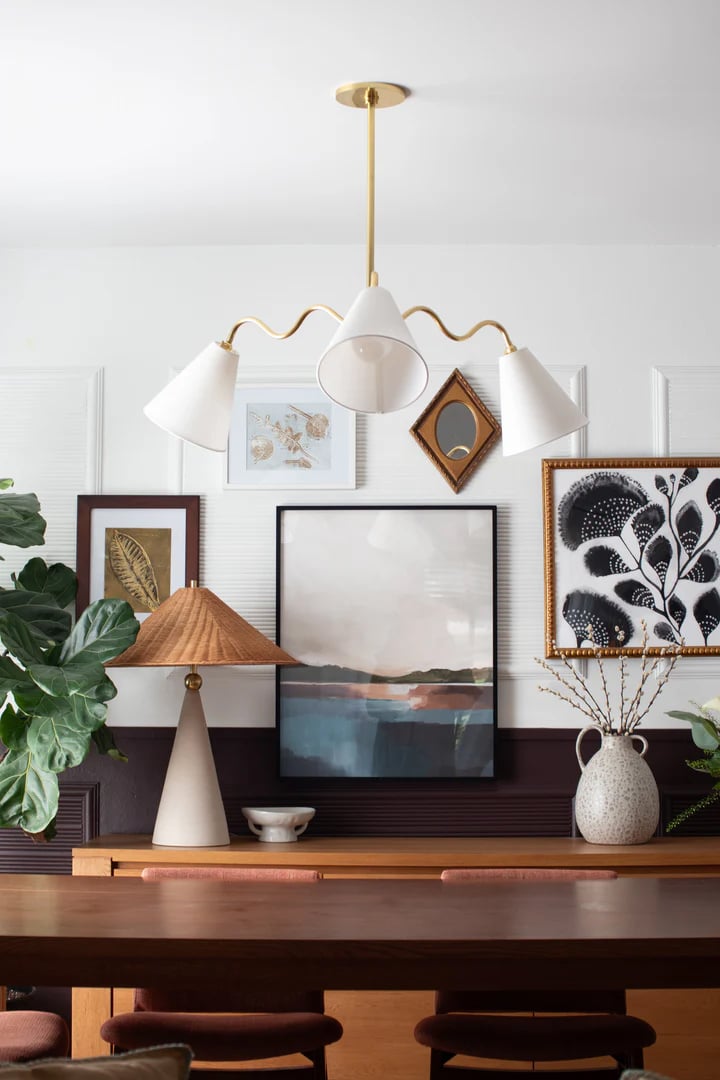
The Onda Chandelier by Mitzi anchors the dining table, while the table lamp adds layered light and balance—demonstrating how thoughtful lighting brings both function and visual harmony. Available at mitzi.com.
Furniture
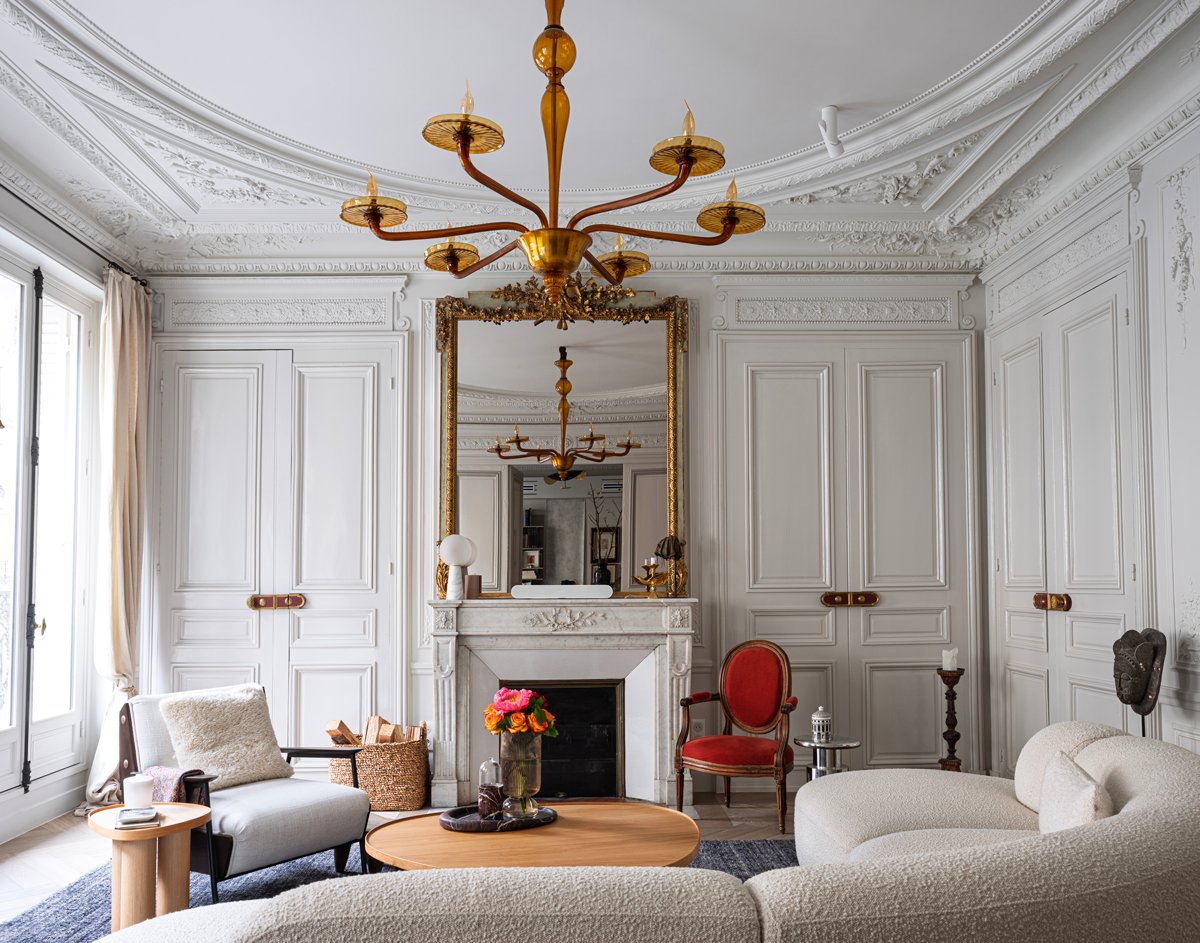
Furniture scale is about more than whether a piece physically fits in a room—it’s about how it relates to the architecture and to the other elements within the space. The sofa in this room works because of its generous proportions and sculptural form. Rather than feeling oversized, it anchors the room, providing a strong visual foundation that allows the surrounding pieces to feel intentional.
Large furniture can feel surprisingly proportional when balanced correctly. Above, the curved sofa is paired with a substantial coffee table and grounded by a plush, oversized rug, creating a cohesive seating area that feels inviting rather than overwhelming. The key is contrast and balance: bold forms softened by organic shapes, and substantial pieces offset by negative space.
Scale isn’t about strict rules or perfect measurements—it’s about awareness. When artwork, pattern, rugs, furniture, and lighting are considered in relation to one another, rooms begin to breathe, giving each element the presence it deserves. It’s the difference between a room that simply exists and one that has been thoughtfully and intentionally curated.
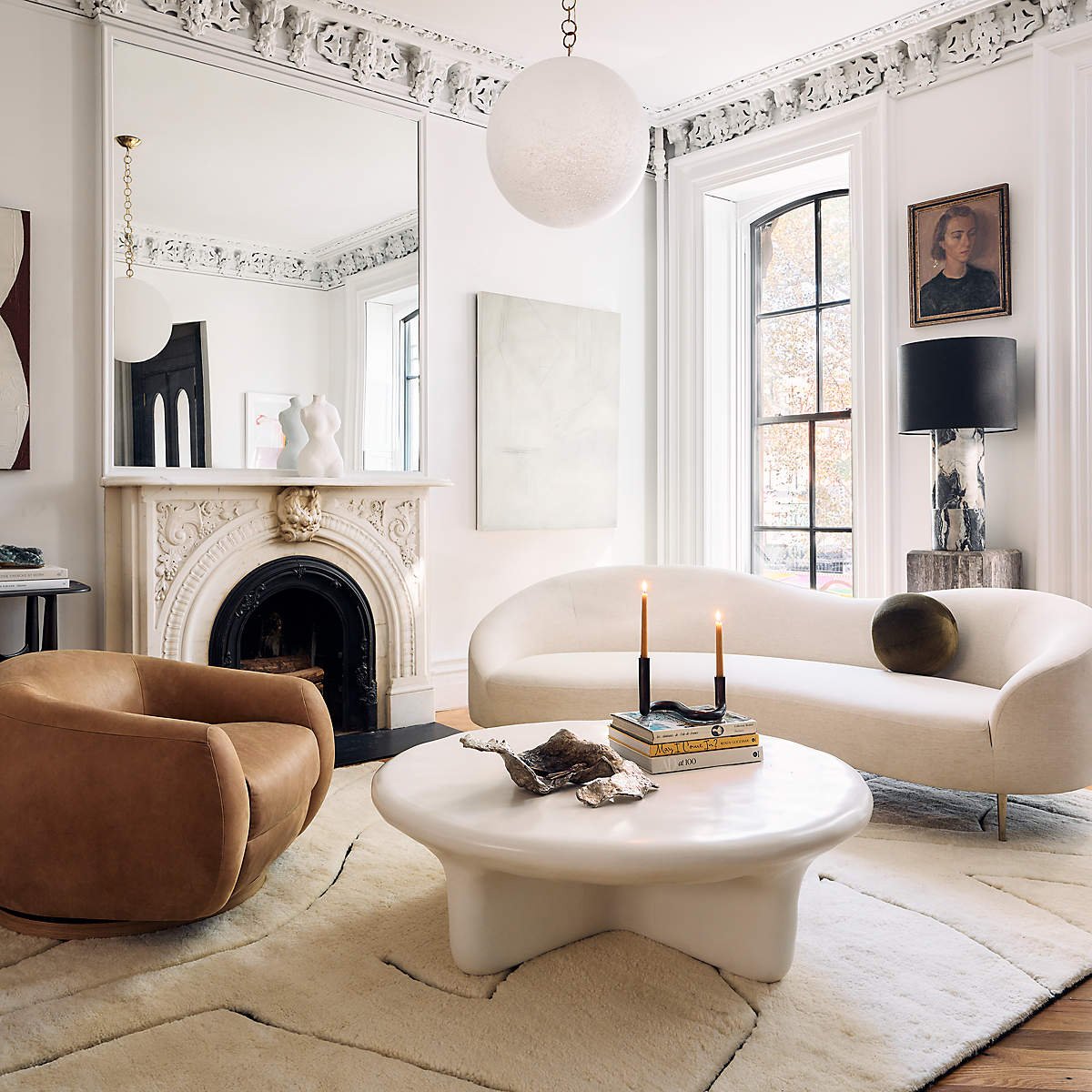
Generously scaled, the Curvo 96.5” sofa anchors the seating area, illustrating how furniture with presence can create balance and comfort when proportioned thoughtfully. Available at CB2.com.
We shared this Importance of Scale article with you in the Summer 2026 issue of NEST Magazine.